Context
The early 20th century in Europe was marked by the First World War, colonialism and the rise of nationalism, which in France manifested itself in heightened jingoism. The presence of soldiers from the colonies on French soil after the war created tensions among the resident population. Finally, in the world of sport, the 1920s saw African American athletes excel in several disciplines. It was in this context that the 1924 Olympic Games were held in Paris.
This general situation and the political and racial ideologies that stemmed from it were reflected in the sports cartoons drawn by Marcel Arnac, illustrator and pioneer of comic strips, for Galeries Lafayette.
In this stylised childish universe, there are numerous stereotypical representations of non-European athletes, in terms of their physical appearance, clothing, names and mediocre sporting performances.
For their part, the French are not always portrayed in a favourable light, either. Sometimes it is chance or luck that leads them to victory, but they always remain superior to their opponents.
Description
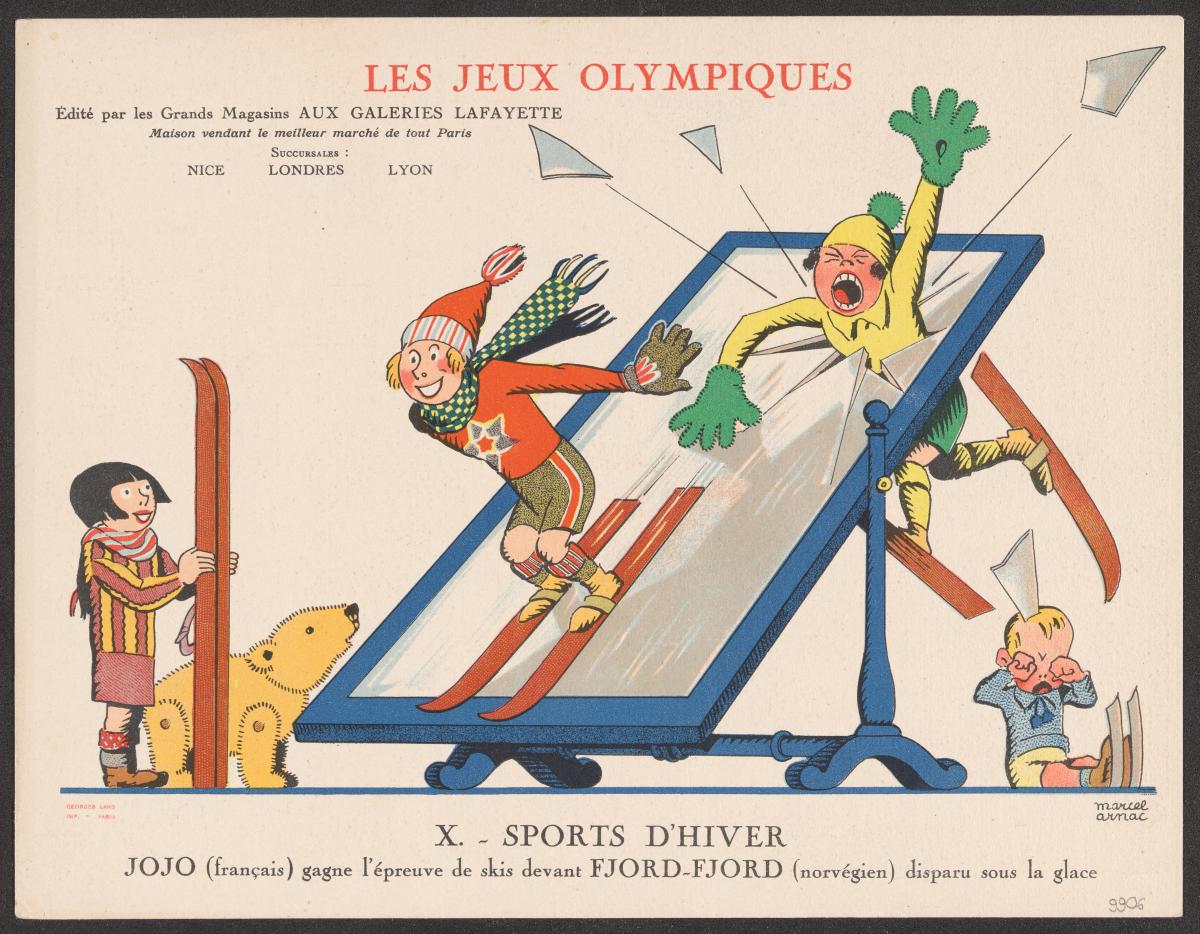
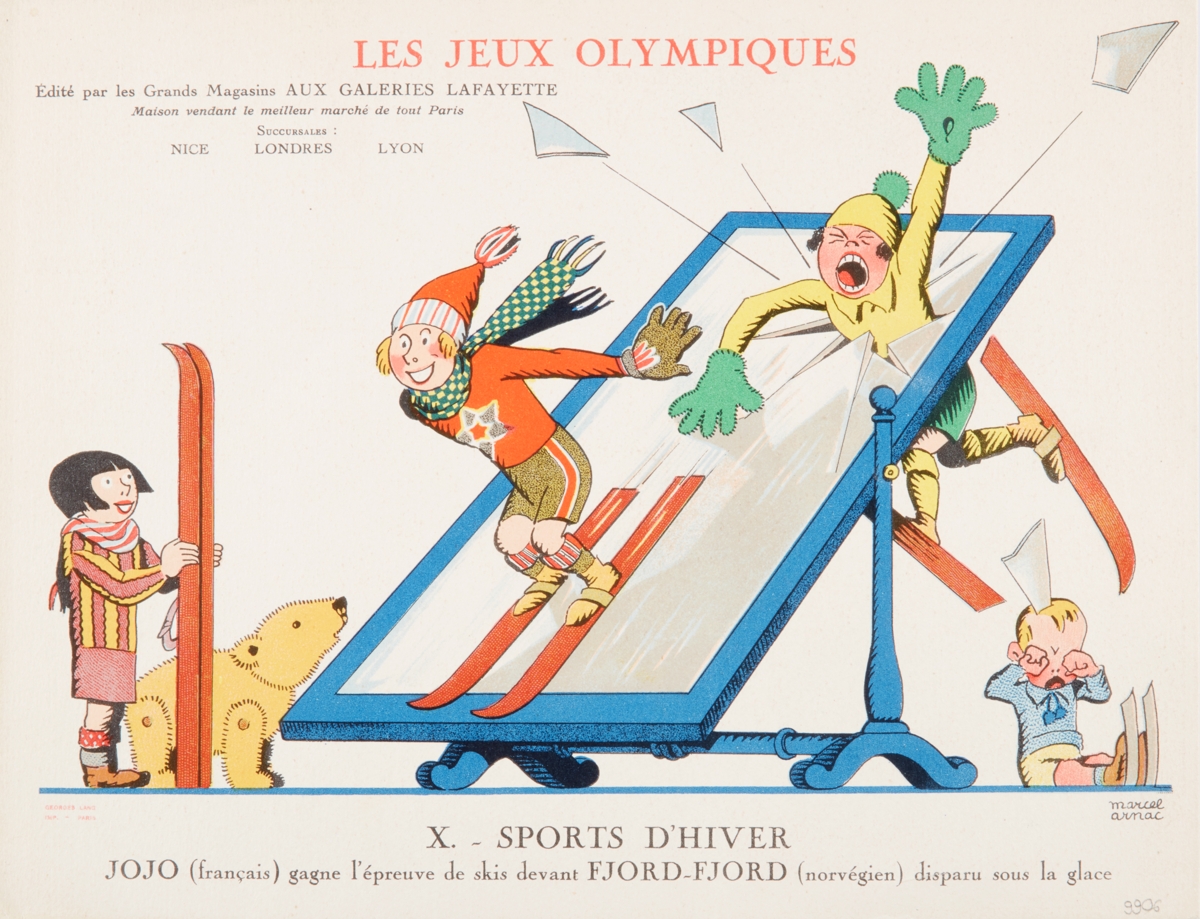
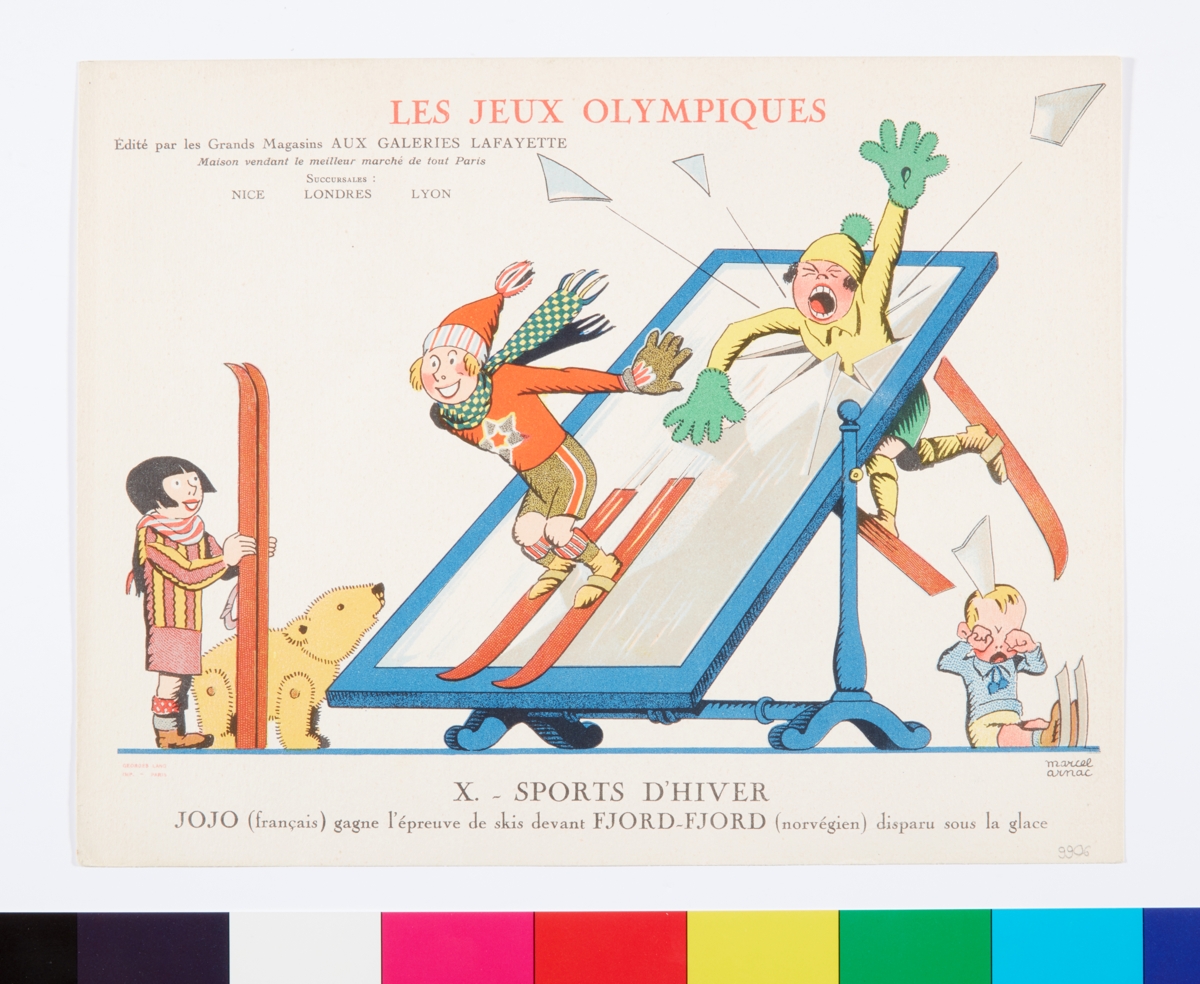
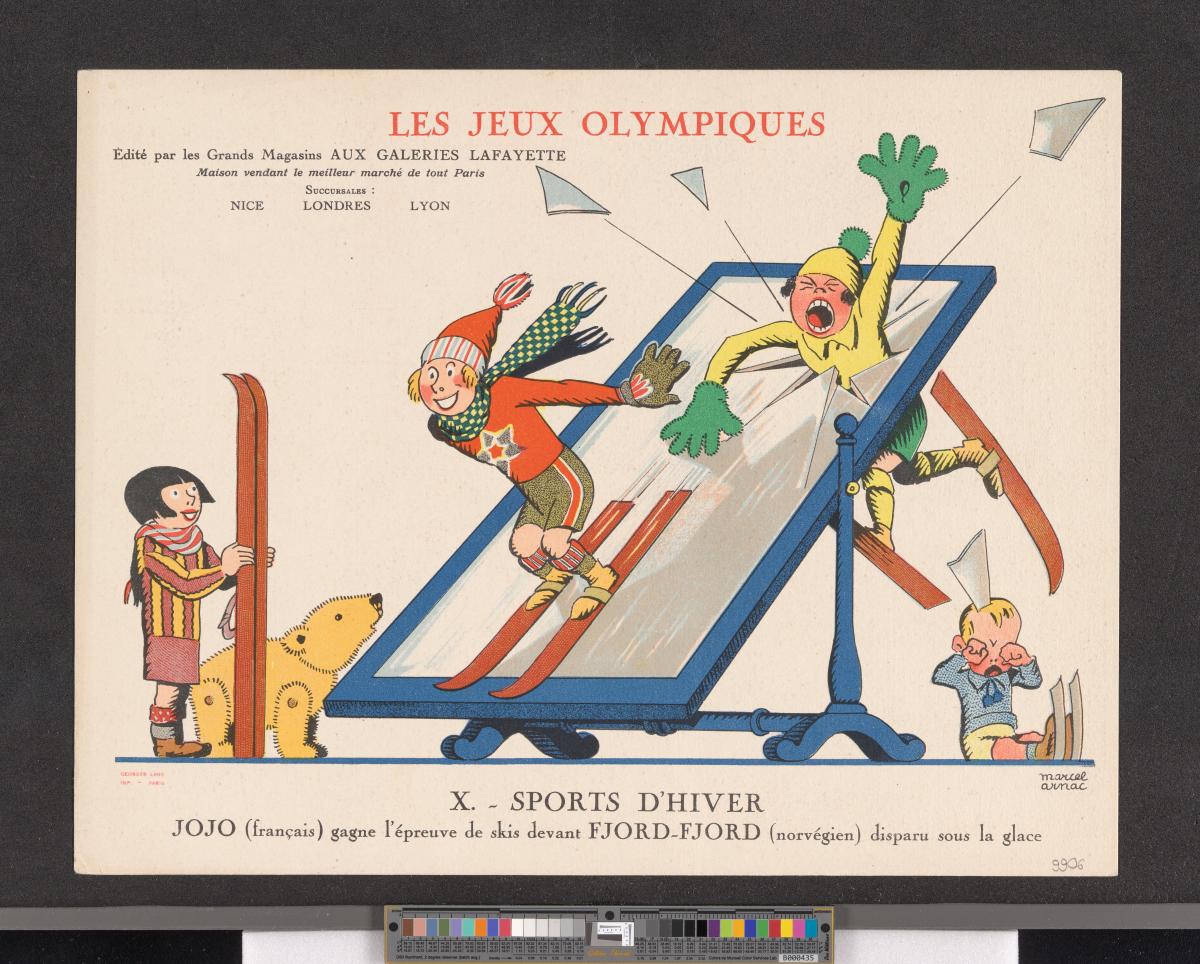
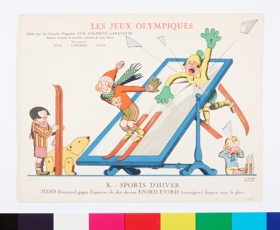
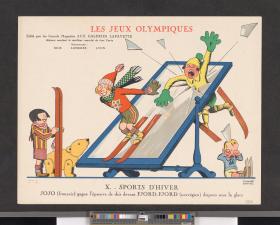
X. Winter sports
This ski race is taking place in a child’s bedroom, on a rather short slope in the form of a mirror. French skier Jojo wins the race thanks to his Norwegian opponent, Fjord Fjord, disappearing under the “ice”. With the Norwegians dominating winter sports in the 1920s, this poster was one way in which France could manage to win.
The poster is almost certainly a reference to the first Olympic Winter Games, held in Chamonix in 1924.